Lecture by Visiting Scientist Greg Husak (UCSB/CHC)
On 15 October 2025, Dr. Greg Husak of the University of California Santa Barbara’s Climate Hazards Center (CHC) visited Gaborone as a guest of RAMP Lab, delivering a Physics Department seminar at the University of Botswana and meeting with teams at the Botswana Department of Meteorological Services.
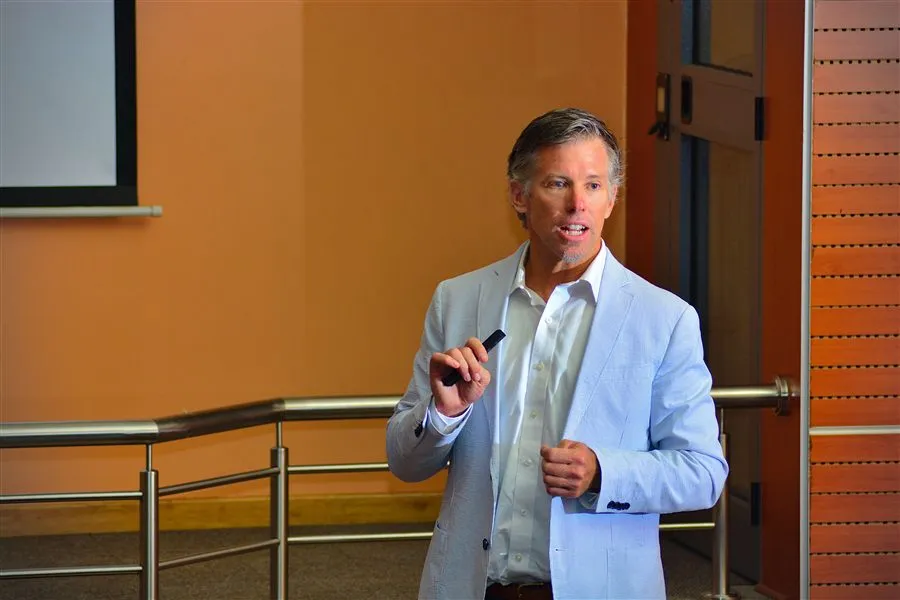
Dr. Husak is a co-founder and Principal Investigator at the CHC and one of the principal developers of CHIRPS - the satellite-derived rainfall product that underpins rainfall monitoring across FEWS NET regions. His research spans the statistical analysis of precipitation, composite drought indices, and satellite-based estimates of cropped area for food production monitoring. The seminar, hosted by the UB Department of Physics and organised with the support of Dr. Tsipha, Dr. Mbangiwa, and Head of Department Prof. Mphale, drew faculty, researchers, and students from across the University.
The lecture covered advances in satellite-based rainfall estimation and their application to climate hazards monitoring across Africa, with particular attention to validation approaches, uncertainty quantification, and communicating probabilistic information to operational decision-makers. The lecture also introduced CHIRPS version 3, launched in late 2025, covering improvements across all three core components of the product: an updated climatological mean (CHPClim) incorporating IMERG satellite data and gauge undercatch correction; a revised infrared-to-rainfall algorithm with better representation of precipitation variability and extreme events; and a substantially expanded station network with improved blending methodology. The talk drew on Dr. Husak’s decades of experience applying remote sensing data in food security early warning contexts across sub-Saharan Africa.
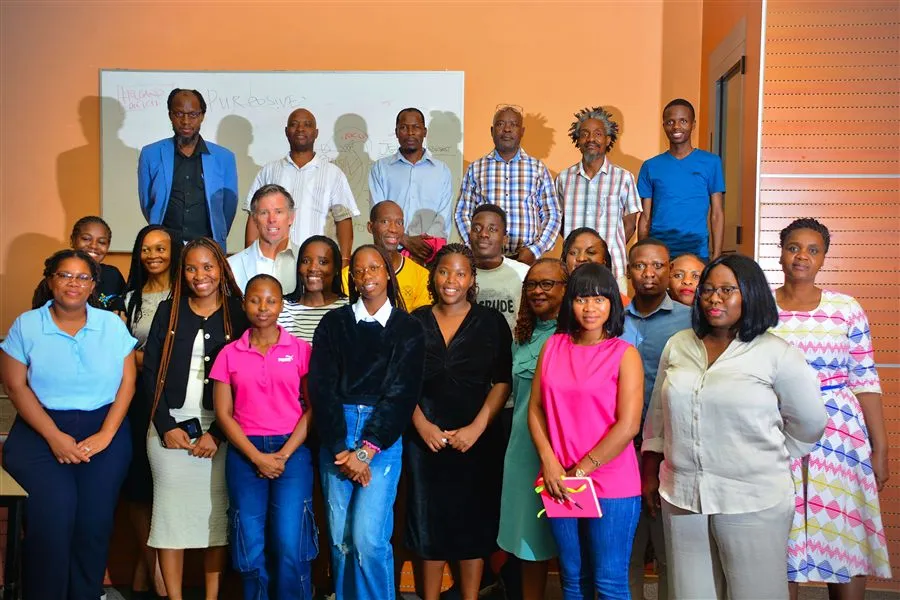
Following the seminar, Dr. Husak visited the BDMS headquarters, where discussions focused on the application of CHIRPS and related CHC datasets to Botswana’s operational climate monitoring needs. The visit also included discussions on future directions for CHIRPS-based monitoring and blended rainfall products for Botswana under BDMS and RAMP Lab.
The visit reflects RAMP Lab’s active research partnership with the Climate Hazards Center, through which CHC datasets and methods anchor much of the lab’s work in rainfall monitoring, drought assessment, and food security early warning across Southern Africa.